

A Confection of Courage
Partha Roy
Please introduce yourself to our readers.
My name is Partha Roy. I am a mechanical engineering graduate, but storytelling has always been the language through which I understand people and history. My writing is inspired by real events, lived experiences, and the extraordinary resilience hidden within ordinary lives. I believe history is shaped not only by kings, wars, or revolutions but also by farmers, labourers, mothers, artisans, and dreamers whose names are often forgotten. Through fiction, I hope to preserve those unheard voices.
What inspired you to write this book?
A Confection of Courage began with a simple question: Who remembers the people whom history forgot?
While reading about the Tebhaga movement, I realized that beyond the political narrative lay countless untold human stories of people who endured hunger, exploitation, uncertainty, and loss, yet continued to build lives with remarkable dignity. I wanted to write about those quiet acts of courage that never entered history books but transformed generations. This novel is my tribute to them.
Please tell us about your book. What is it about, and who is it written for?
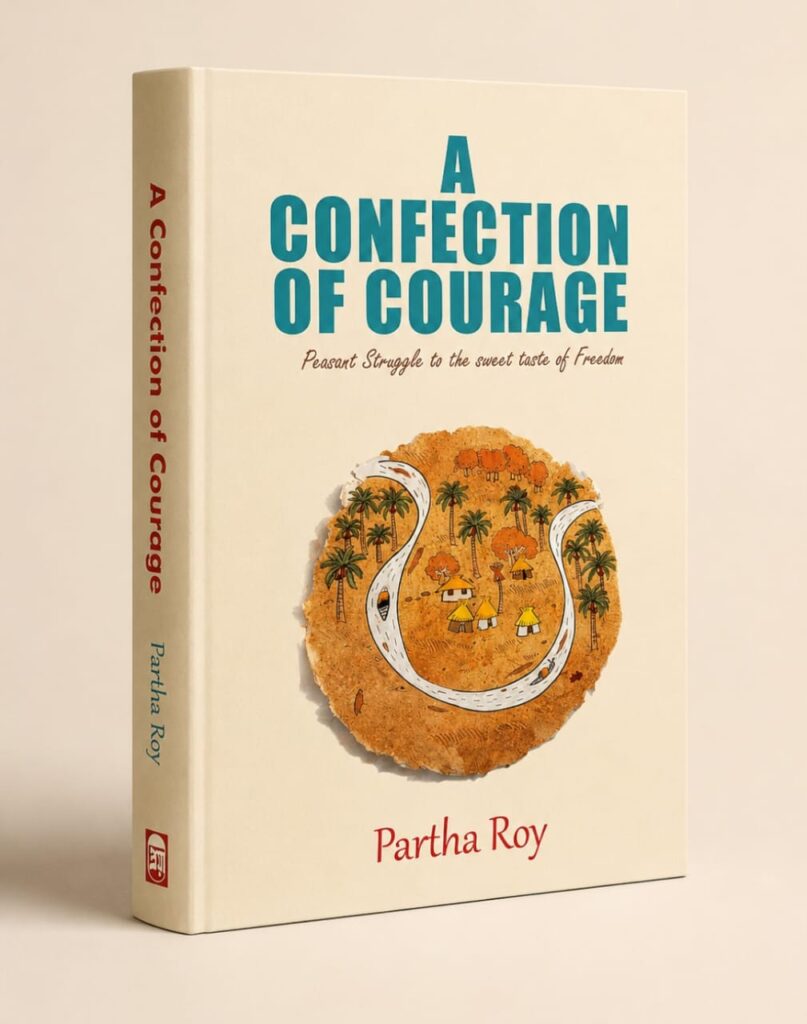
A Confection of Courage is a historical novel inspired by true events and rooted in rural Bengal during the Tebhaga years.
At its heart are Kalyan, a humble date-palm sap collector, and Rani, whose lives unfold against a world marked by hardship, inequality, and hope. More than a story of survival, it explores the courage to begin again, to protect one’s dignity, and to build a future even when circumstances seem impossible.
It is written for readers who enjoy historical fiction with emotional depth for those who believe that the greatest stories are often lived by ordinary people rather than celebrated heroes.
What was the most enjoyable or the most challenging part of writing this book?
The greatest challenge was finding the balance between history and humanity.
Historical events provide context, but it is people who make readers care. I wanted every chapter to remain faithful to its historical setting while allowing the characters to breathe as real human beings instead of becoming symbols or lessons.
The most rewarding part was watching Kalyan and Rani gradually becoming more than fictional characters. They began to feel like people whose lives deserved to be remembered.
What do you hope readers will take away after reading your book?
I hope readers finish the novel with a renewed appreciation for the strength of ordinary people.
Courage is not always loud. Sometimes it is choosing kindness during hardship, preserving dignity when circumstances strip everything else away, or beginning again despite repeated setbacks.
If the book encourages readers to look at history with greater empathy and to recognise the extraordinary resilience hidden within everyday lives, then it has achieved its purpose.
Where can readers purchase your book?
Flipkart (Paperback and hard cover): https://www.flipkart.com/a-confection-of-courage/p/itm7a345a84d6dfa
Amazon (e-book): https://amzn.in/d/05JUqi2P
Google Books (e-book): https://play.google.com/store/books/details/Partha_Roy_A_confection_of_courage?id=JGLGEQAAQBAJ
Good read.. very insightful & unique approach…
Thank you Divya ji. This is much appreciated. I hope people resonate with the story and iys characters. For the story, real tragedy is money. Money is required but it must not drive us to our own destruction. I have planted many seeds in my novel. Now, I will watch them grow as it finds new readers across the world. Thank you for your valuable time and consideration. It really means a lot.
Some journeys leave an everlasting mark on the people who are fortunate enough to witness them from close quarters. This book has been one such journey for me.
Thank you Divya Ma’am, for this beautiful interview, and congratulations to Partha. Wishing A Confection of Courage the wide readership it truly deserves.
A Confection of Courage — A Quiet Story of Extraordinary Resilience
A Confection of Courage beautifully brings to life the struggles of ordinary people in rural Bengal. Through Kalyan and Rani, the novel explores poverty, exploitation, dignity of labour, love, memory and the meaning of freedom.
What makes the book special is its quiet portrayal of courage. The characters are not conventional heroes; their strength lies in their ability to endure, work, love and hope despite difficult circumstances.
The vivid descriptions of village life, palm sap and jaggery-making create an immersive atmosphere, while the poetry adds emotional and philosophical depth.
A thoughtful, lyrical and deeply human read that reminds us that sometimes the greatest courage is simply the courage to keep going.
Recommended for readers who enjoy meaningful literary fiction and stories that stay with you long after the final page.